Debris,Deterioration, and Spatiality
Debris Path Intervention
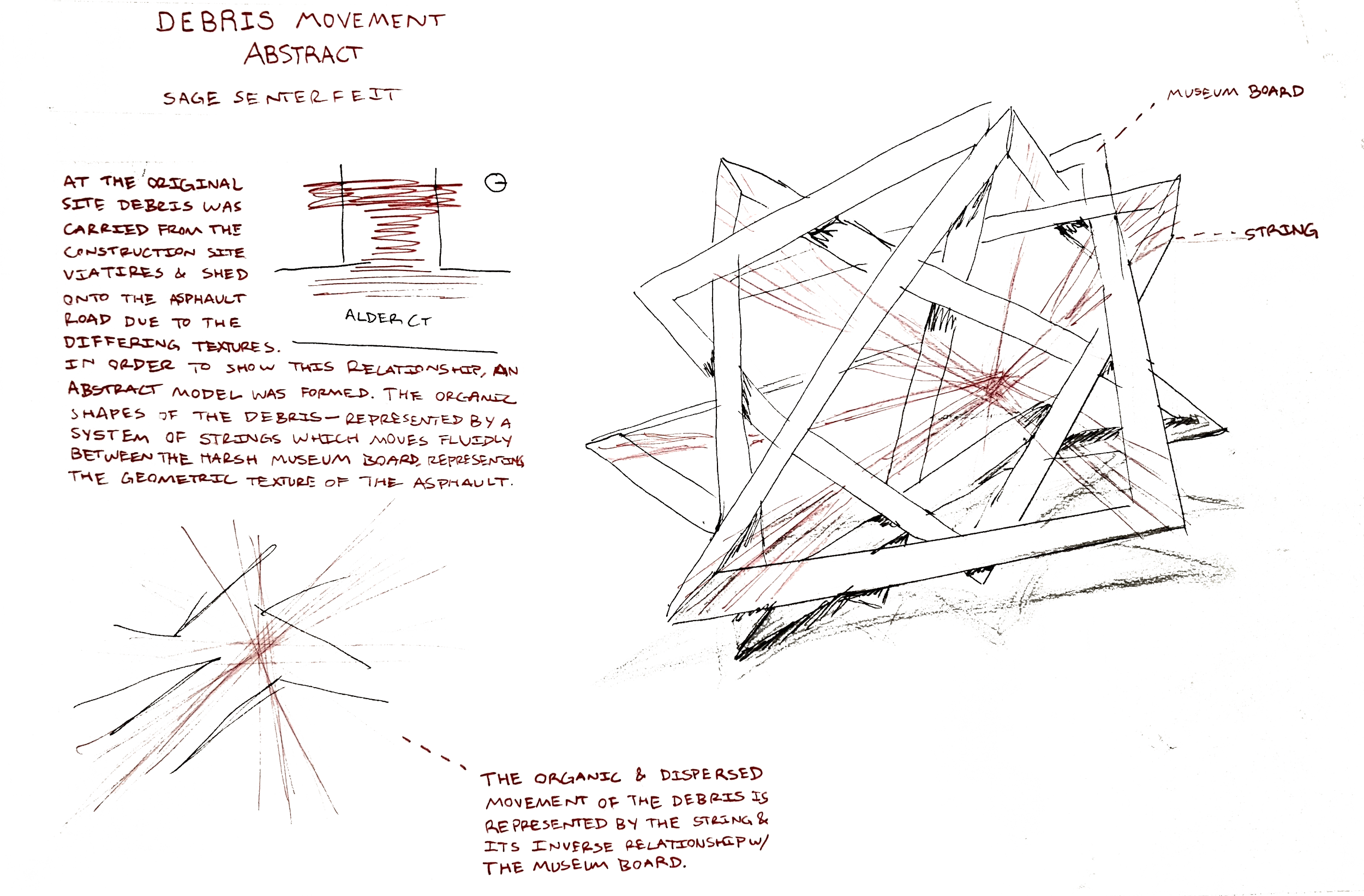
Abstracting debris movement through model and form.
Exploring Debris
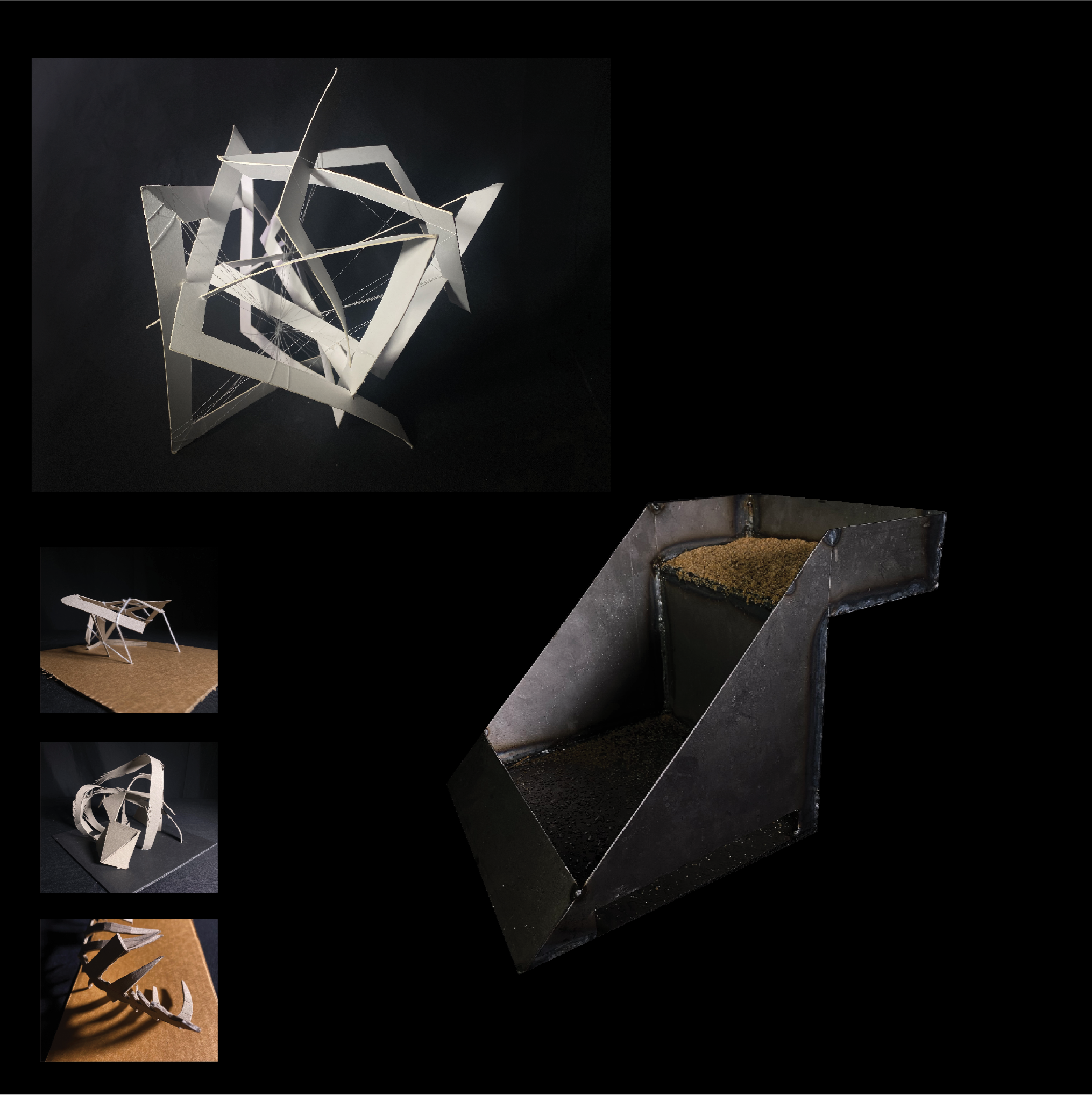
Debris Pathway Intervention
13 x 15 x 12 in
Mig Welded Steel Sand
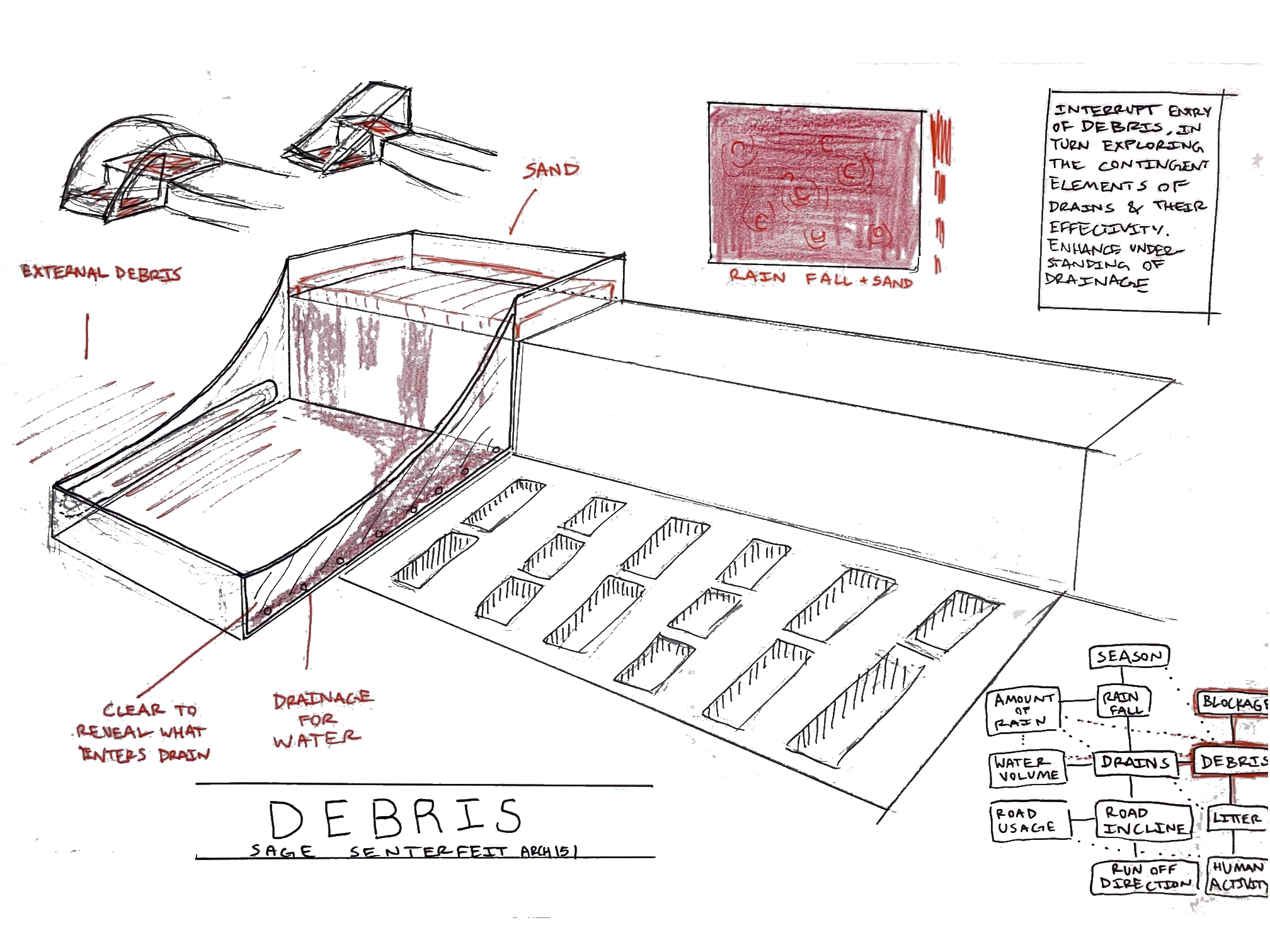
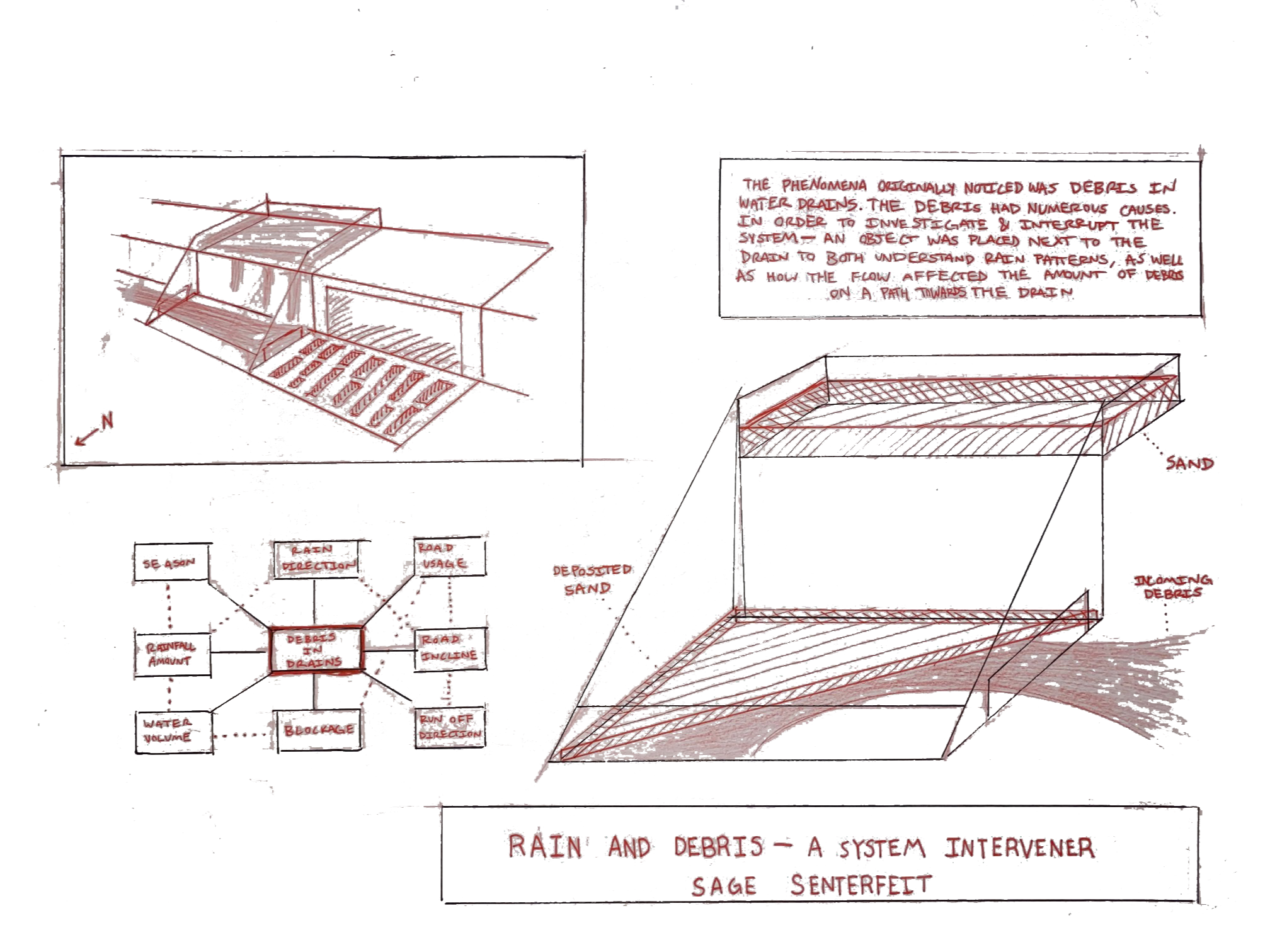
After exploring the debris movement relationship the next goal was to design something to both record the system, as well as disrupt it. Intervening the debris movement process via a metal structure revealed the almost invisible process of rain transporting and creating debris pathways.
Mapping Debris Movement Via Sculpture
12 x 12 x 12 in
Cardstock & String
Here the debris is represented by string, the cardstock representing the rigid environment it spreads across.
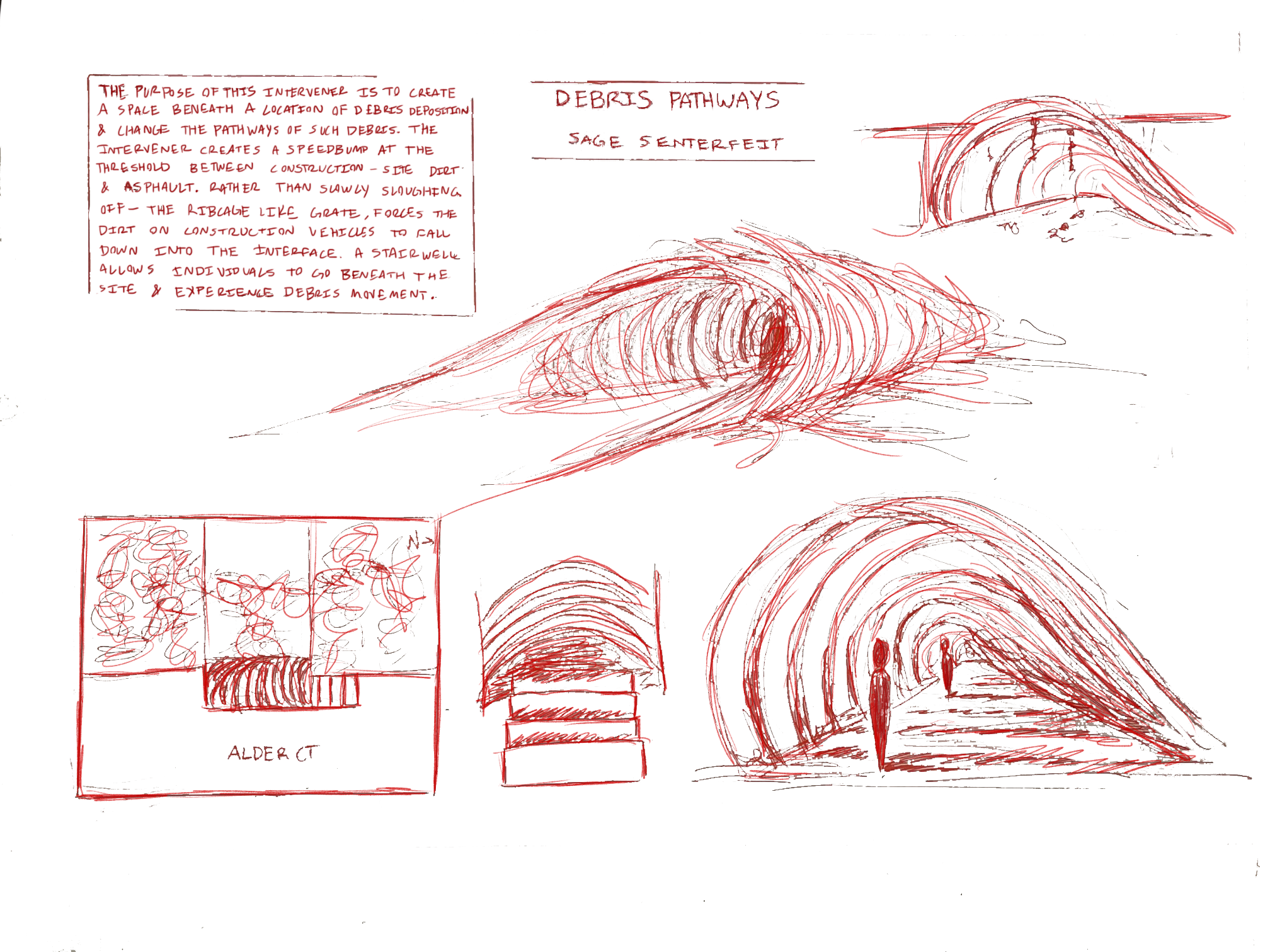
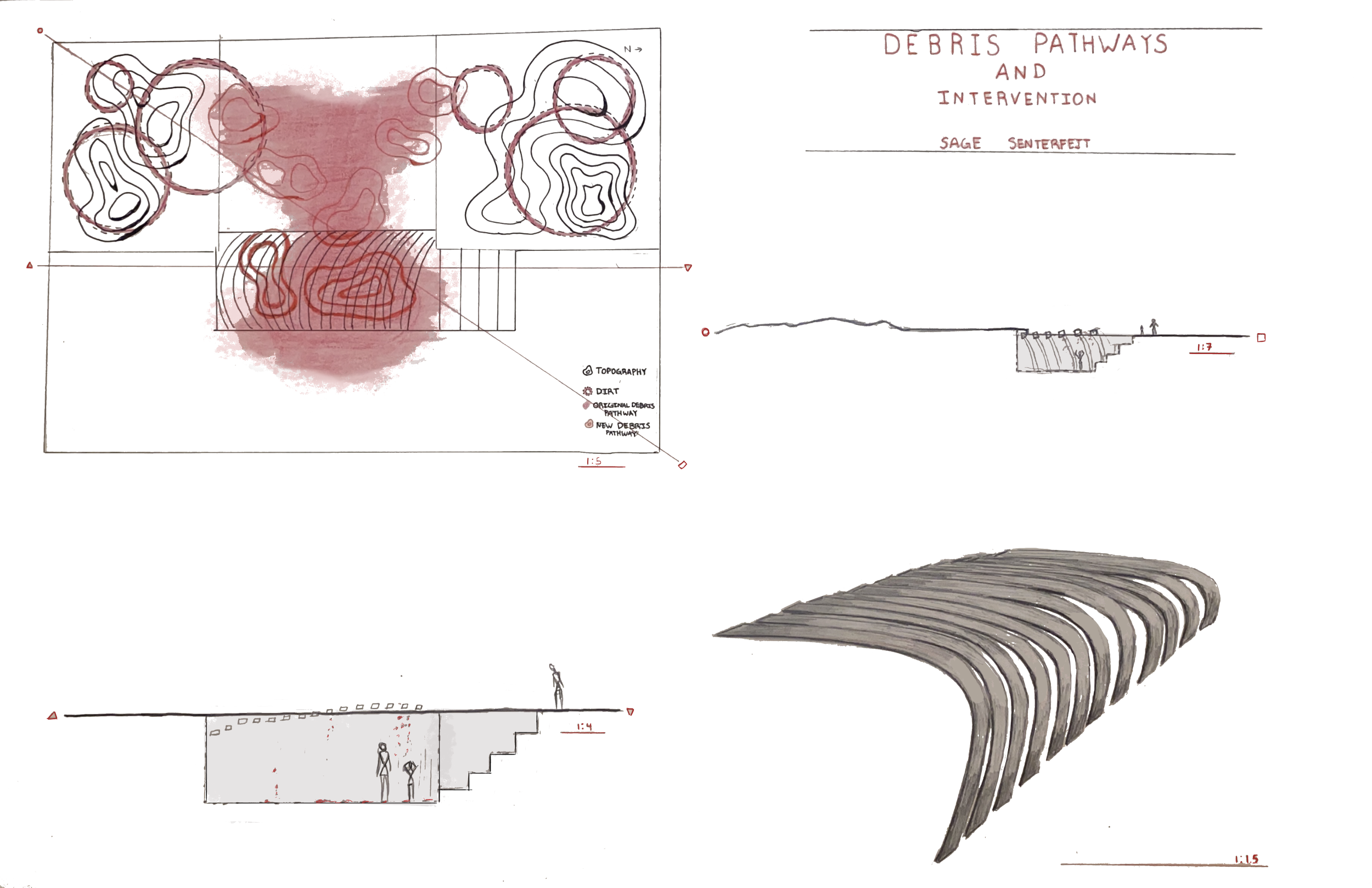
36 x 24 in Plan Isometric Section Views Graphite & Pen
Conceptual ideation of the intervention was explored here. By mapping the construction vehicle pathways, the highest density of debris became evident. This was the threshold between the street and construction site. By placing the intervention in this space, the user is be able to experience and observe the debris movement most clearly.

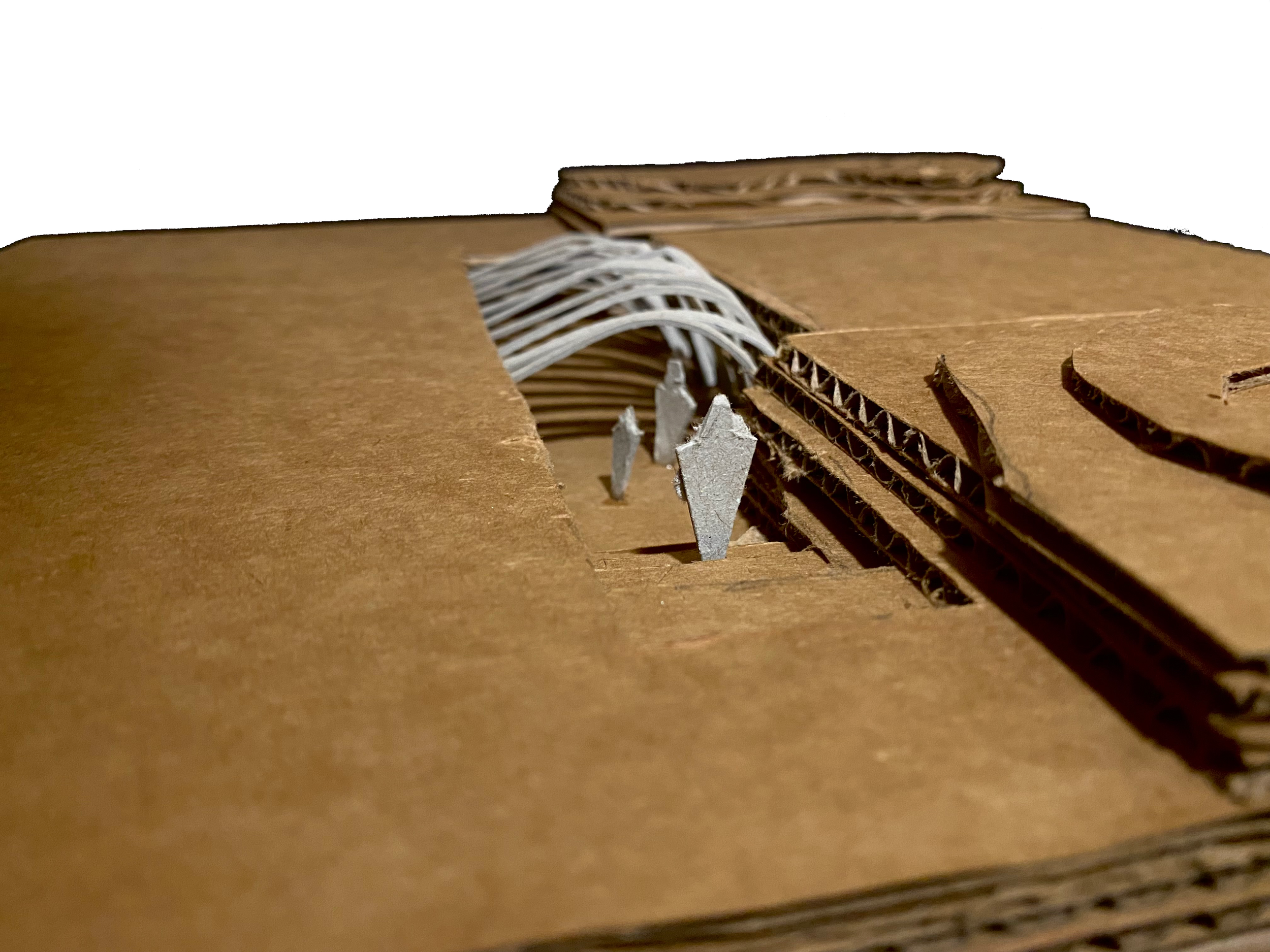
12 x 12 in 1:7 Scale Cardboard Chipboard
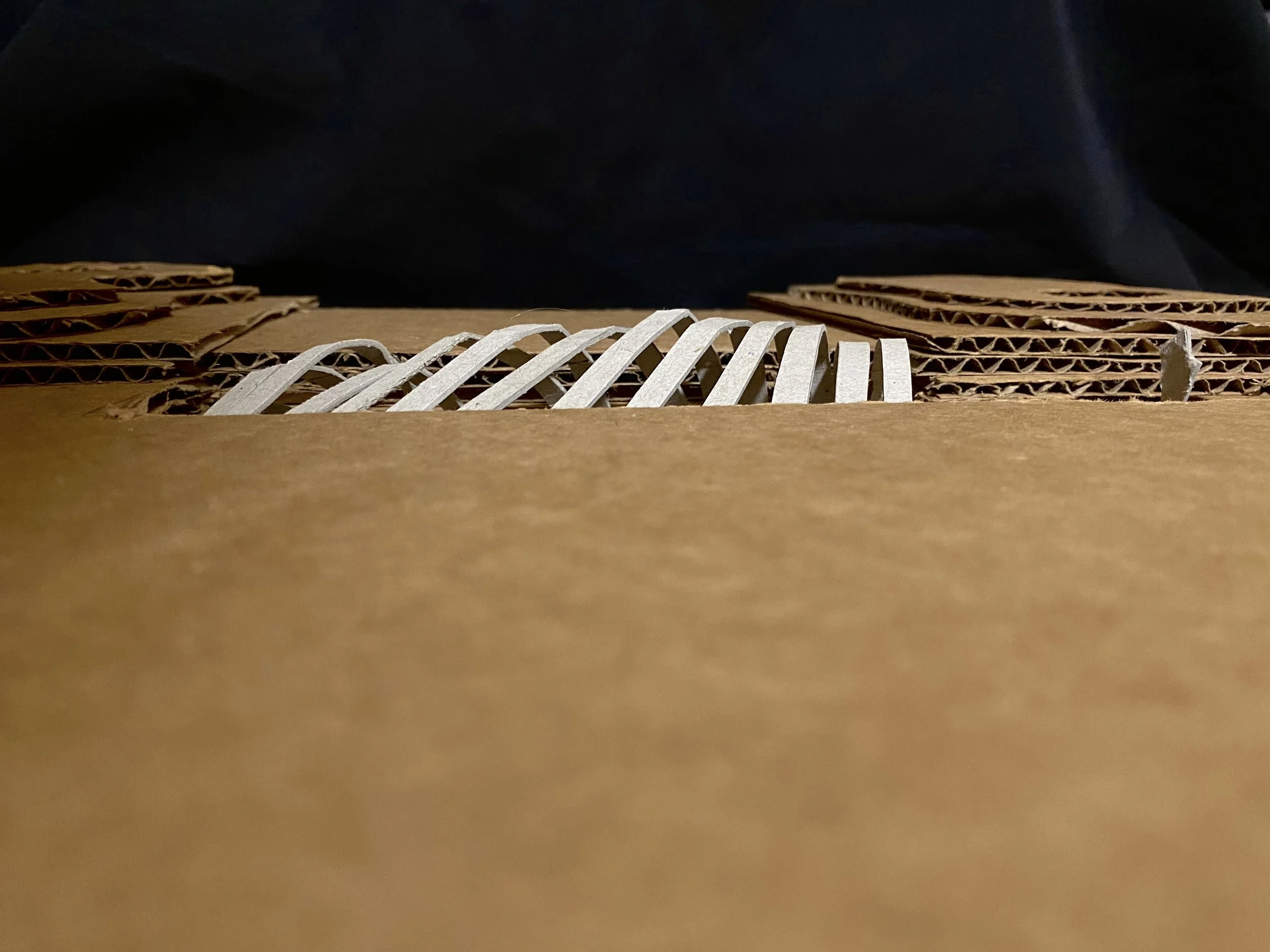
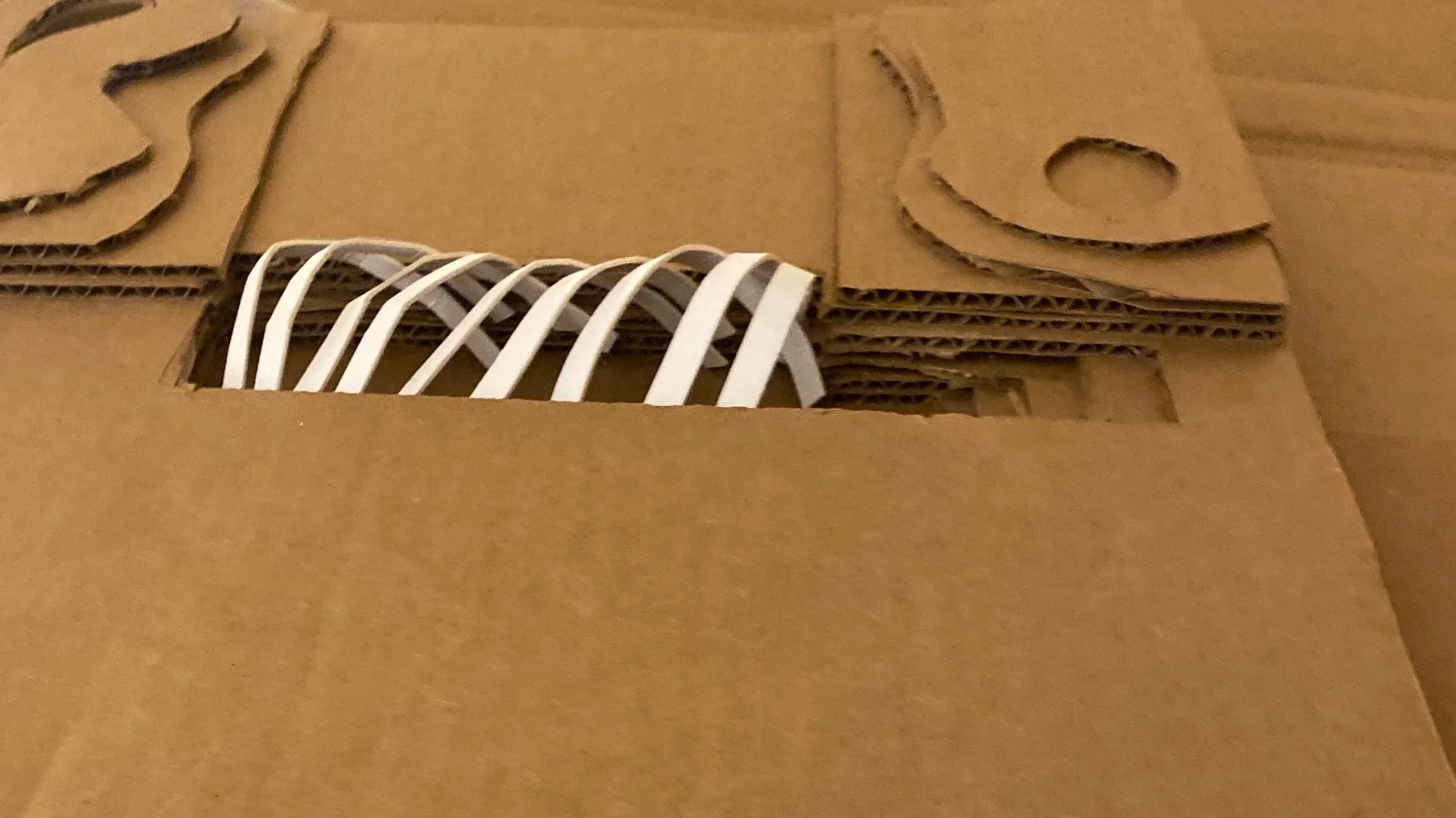
The phenomena explored at the chosen site was the pathways of debris sloughed off of tires from construction vehicles. Specifically when leaving the dirt construction site and transitioning to concrete, the debris from tires spread. This inverse relationship; the softness of debris and the harshness of concrete created intriguing dialogue. As one hits another the other is affected. In order to create an experience for a user to fully understand and be impacted by this system, a ‘speed bump’ or curved grate was created just at the threshold of the dirt construction site and the concrete road. Users could enter underneath the grate and experience the construction vehicles driving above, showering debris onto the individuals below.
Debris, Deterioration, Spatiality
30 × 40 in graphite
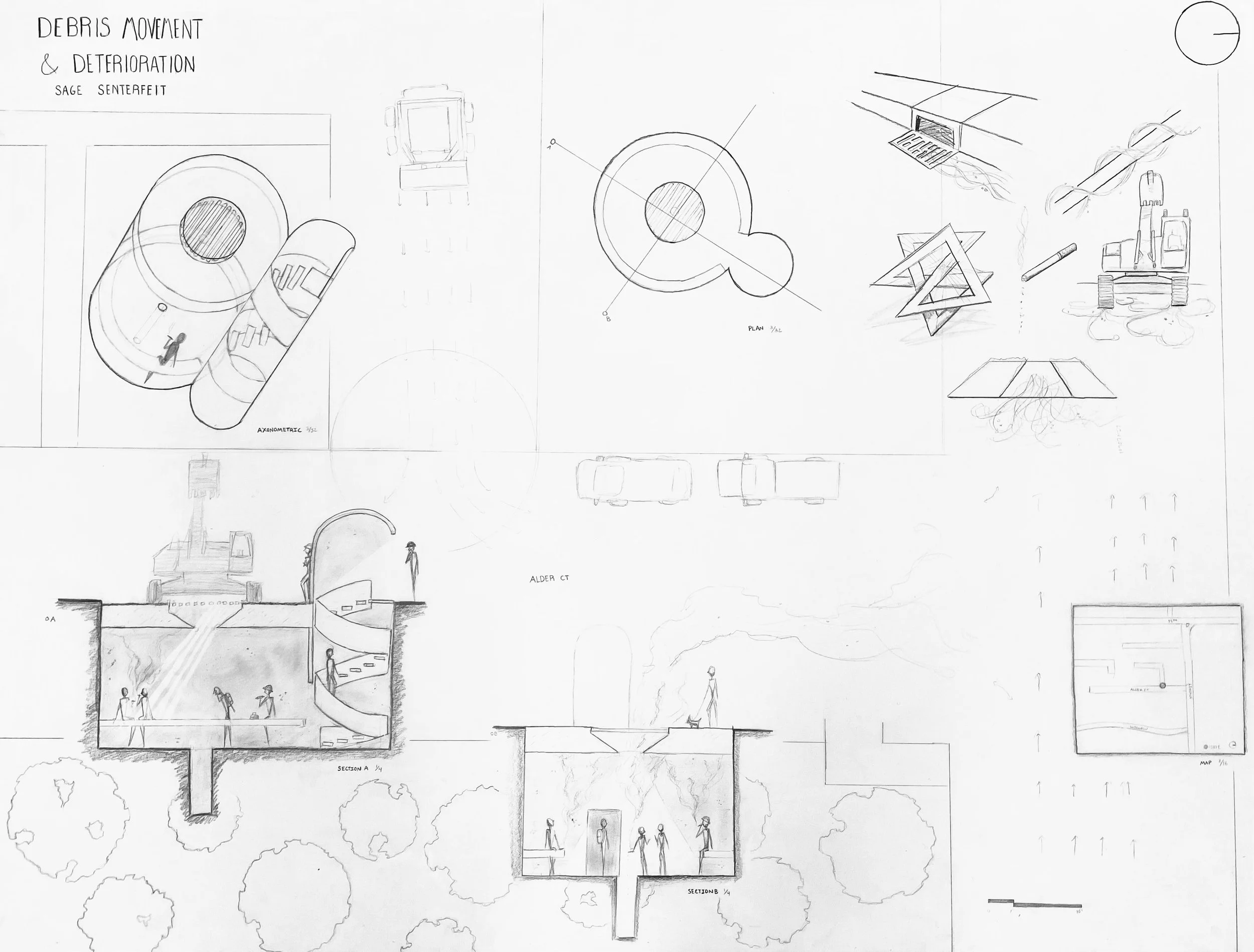
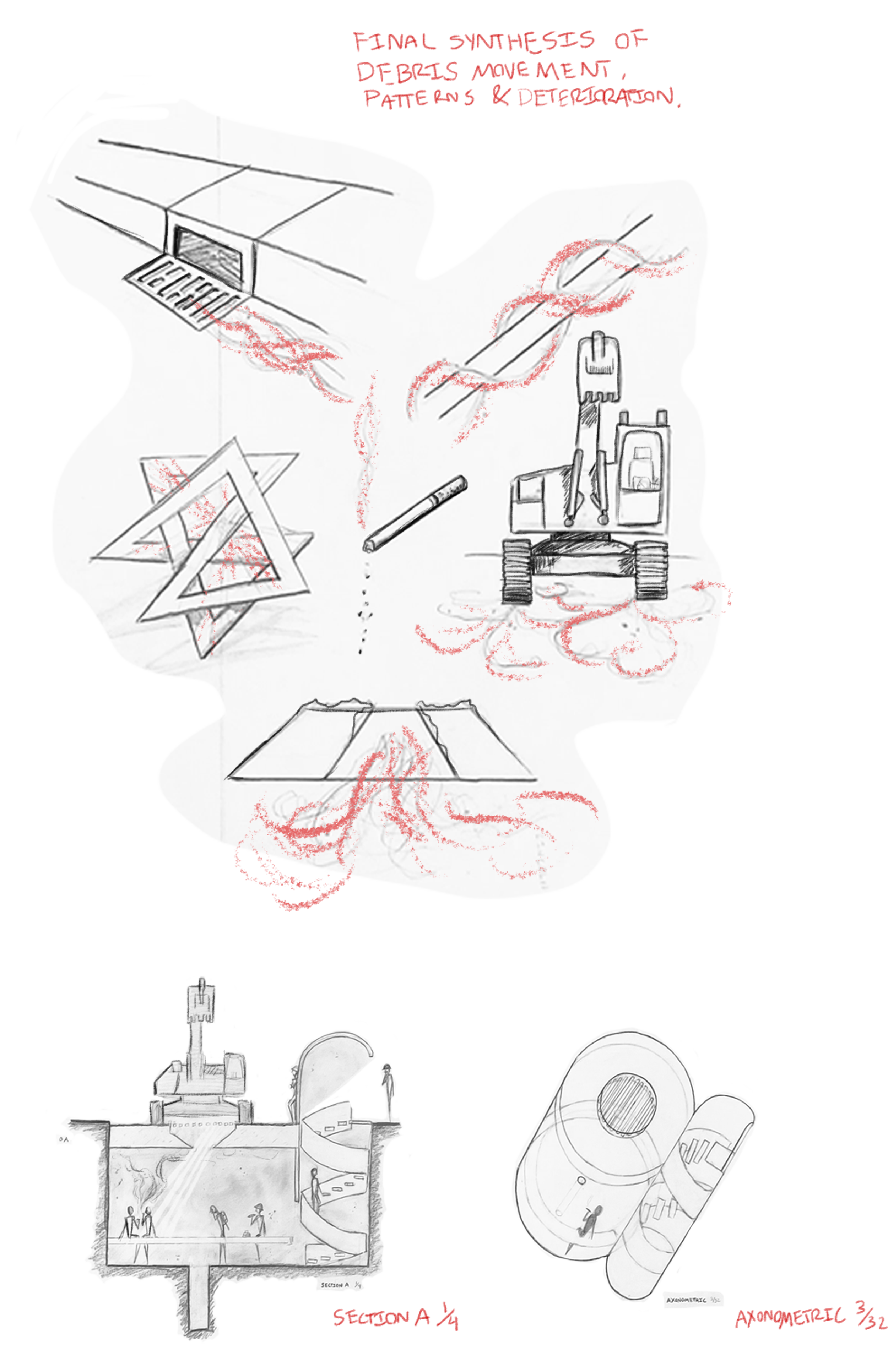
Drawing from previous explorations on debris— inspired by the overall theme of inverse relationships, a space was fabricated to incorporate all elements. Located at the threshold between construction site and street, an underground ‘bunker-like’ space was created. The space would act as a smokers lounge. Containing a grated skylight which would sit flush with street level. As vehicles traveled over, debris would fall down through the grate. The debris falls into a deep hole acting as both a receptical for the dirt debris, but also as an ashtray for individuals within the smoke space. The space inspires the user to consider the deterioration of physical objects, via debris, but also provides the opportunity for users to self reflect on the motion ofsmoking, a deteriorating act.